Three condo disclosure packets, three buildings within four blocks of each other, and on paper the numbers look almost identical. Each association reports a reserve fund sitting right around 10 percent of its annual operating budget. A buyer working through downtown Traverse City listings this fall could tour a converted office building on Front Street, a mid-rise on the Boardman River, and a brand-new pre-construction unit in the same afternoon and come away thinking the associations are all playing by the same rulebook, funded to roughly the same standard, carrying roughly the same risk.
They are not. Condo Control explains that the 10 percent figure is the legal minimum every Michigan condo association has to clear. It says nothing about what a specific building actually needs, and Michigan's own courts have already said as much.
The Number Is a Floor, Not a Report Card
Michigan's Condominium Act requires every association of co-owners to maintain a reserve fund for major repairs and replacement of common elements. The state's administrative rule fills in the number: at least 10 percent of the association's current annual budget, spent only on major repairs and replacements rather than routine upkeep.
That 10 percent rule is easy to read as a health check. It is not one. It is a statutory minimum, and the Michigan Court of Appeals addressed the difference directly in Newport West Condominium Ass'n v. Veniar, ruling that a board setting its annual budget has to weigh the actual age, condition, and depreciation of the property's capital assets, not simply default to whatever the administrative floor requires. A board can be in full compliance with the letter of Michigan law and still be years behind on what its roof, elevator, or parking structure will actually cost to replace.
That gap between the floor and the real number is exactly where a downtown Traverse City condo buyer needs to be looking, because the size of the gap depends entirely on what kind of building sits behind the HOA statement.
Three Building Generations, Three Different Repair Clocks
Downtown's condo stock breaks into rough generations, and each one carries a different relationship to that 10 percent floor.
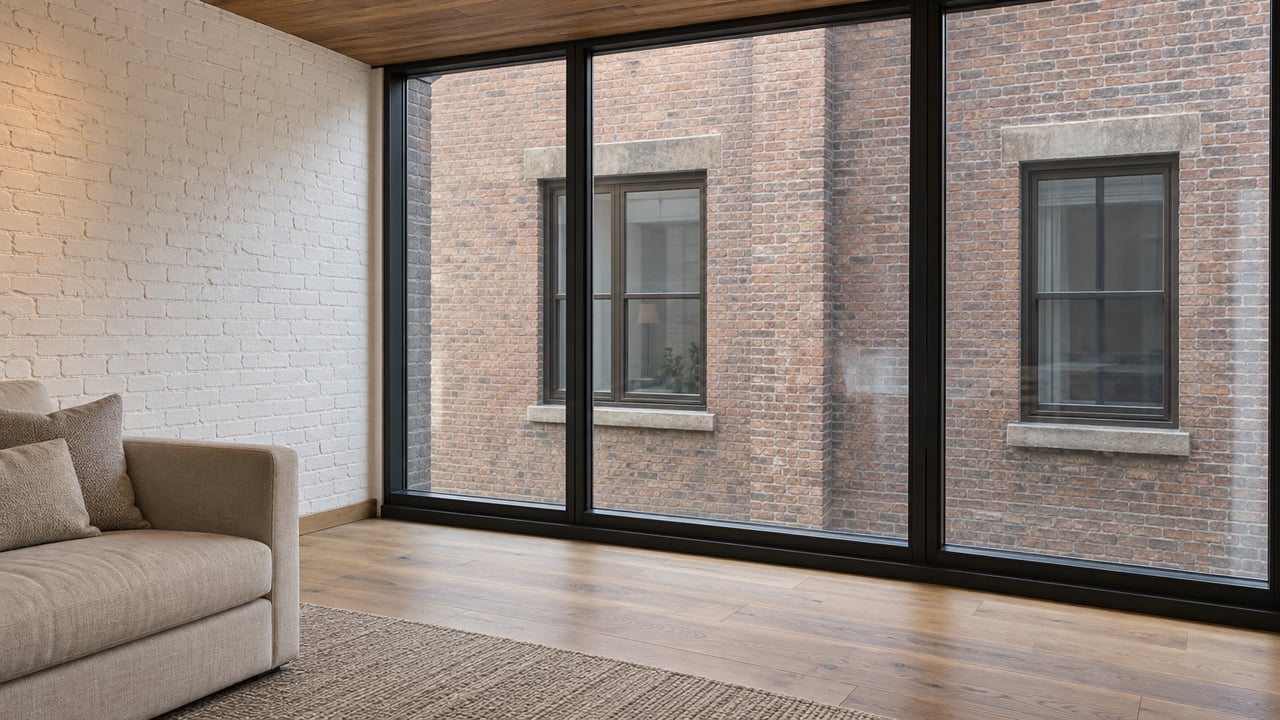
The oldest cohort is converted commercial space. Buildings like the Hannah Lay Building predate the legal concept of a Michigan condominium altogether. Michigan's Condominium Act only became law in 1978. Any downtown building older than that was engineered as a single commercial structure, not as a shared asset with a board deciding how to fund its future. When former office floors get carved into residential units with exposed brick and tall ceilings, the association inherits mechanicals, elevators, and structural systems that were never designed with a 20 to 30 year replacement schedule for one owner in mind. The disclosure packet on one of these conversions can show a reserve fund that clears the 10 percent minimum easily, simply because the current operating budget is small relative to what a full masonry or roof restoration would eventually cost.
The second cohort is the mid-life buildings that anchor the current market, structures like River's Edge West Condominiums, a six-story building completed in 1998 with 150 units overlooking the Boardman River and West Bay, and 101 N Park Street, a five-story, 62-unit building completed in 2010. These buildings are old enough that original roofs, elevator components, and major mechanical systems are approaching or inside their normal replacement window, the same categories a reserve study is built to track: structural, mechanical, electrical, and plumbing components, each with an estimated remaining useful life and a current replacement cost. A board here that has been contributing the bare 10 percent for two decades is carrying compounding risk that a brand-new building simply hasn't had time to accumulate.
The third cohort is new construction, and downtown's clearest current example is The Ottaway, a luxury condominium project introduced this year at 424 Front Street, built by J. Peterson Homes in collaboration with AMDG Architects. A building like this starts its reserve clock at zero deferred maintenance. There is no backlog of aging components to fund around, which is a genuine advantage, but it also means there is no operating history yet, no meeting minutes to review, no track record of how the board handles its first real capital decision.
None of this makes one generation of building better than another. It means the same 10 percent line means something different depending on which generation you're standing in front of, and the only way to know which situation you're in is to ask for the actual documents rather than the headline percentage.
| Building type | Example | Year built or introduced | What the reserve fund is really covering |
|---|---|---|---|
| Historic conversion | Hannah Lay Building | Predates 1978 Condominium Act | Systems built for single commercial use, now retrofitted for shared residential ownership |
| Established mid-rise | River's Edge West Condominiums | Completed 1998 | Original components approaching normal replacement age |
| Established mid-rise | 101 N Park Street | Completed 2010 | Same replacement-age exposure, shorter runway |
| New construction | The Ottaway | Introduced 2026 | No deferred maintenance yet, no operating history to review |
Parking Runs Through the Same Math
Parking in downtown condo buildings is rarely a simple line item, and it draws on the same reserve logic. In several downtown buildings, a garage space is sold separately from the unit itself, with any remaining need for a car met through the city's permit system rather than a dedicated spot. The City of Traverse City's own parking permit program lays out exactly how that works: surface and garage permits are sold monthly, are non-transferable between vehicles, and are enforced on a first-come, first-served basis rather than a guaranteed reservation, which means a permit is access to a system, not a deeded piece of the building.
That distinction matters for reserve planning because a parking garage attached to a condo building is itself a major common element, subject to the same freeze-thaw wear every Michigan structure faces. A garage that needs resurfacing or structural repair pulls from the same reserve fund as the roof and the elevator. Asking whether parking is deeded, garage-based, or permit-dependent is not just a lifestyle question. It is part of understanding what the association's reserve fund actually has to cover.
The Bill Working Through Lansing Right Now
There is a reason this conversation is more relevant this year than it was a few years ago. A bill known as HB 5784 is currently working through the Michigan Legislature's 2025-2026 session, amending the same section of the Condominium Act that sets the reserve fund requirement. It would require many existing condominium associations to commission a professional reserve study, prepared by a licensed architect, engineer, or certified reserve specialist, that inventories every structural, mechanical, electrical, and plumbing component the association is responsible for, states each one's normal and remaining useful life, and estimates the current cost of repair or replacement. Boards would then have to notify owners annually of how their funding compares to that study's targets.
This isn't the first attempt. A nearly identical bill, HB 5019, was introduced in the 2023-2024 session and died in committee before being reintroduced in its current form. It has not yet passed, and Michigan's reserve requirement today remains the 10 percent administrative floor rather than a mandated professional study. But the bill's reappearance is itself useful information for a downtown buyer this fall. Associations that already have a real reserve study on file, rather than just a compliant percentage, are ahead of where state law may eventually require them to be. Asking a board whether one exists, even though nothing currently obligates them to have one, is a fair diligence question regardless of what happens in Lansing.
What to Ask Before You Write an Offer
A few questions turn the reserve line from a number into information:
- Has this association ever commissioned a professional reserve study, and if so, when
- What is the building's age, and which major components (roof, elevator, HVAC, garage structure) are original
- How has the reserve fund balance moved over the last three to five years, not just where it sits today
- Is parking deeded to the unit, assigned by the association, or dependent on a city permit
- Have there been special assessments in the building's history, and what triggered them
None of these questions require a law degree to ask. They require the documents, not just the summary sheet, and a willingness to read a 1998 building differently than a 2026 one.
FAQ
Does a low HOA fee mean a building is well managed? Not necessarily. A low fee can mean lower services, or it can mean an association funding at the bare 10 percent minimum on a building old enough to need more. The fee alone doesn't distinguish between the two.
Is Michigan's 10 percent reserve rule the same for every condo association? Yes, the percentage itself is uniform under Administrative Rule R 559.511. What varies is whether that percentage is adequate for a given building's age and condition, which Michigan case law says boards are supposed to consider on top of the minimum.
Should I wait to buy until the reserve study bill passes? There's no need to wait. The documents that matter, budget history, meeting minutes, and any existing reserve study, are available to request today regardless of what Lansing eventually decides.
Reading a downtown condo's HOA documents building by building instead of number by number is the kind of diligence that separates a straightforward closing from a surprise assessment two winters in. If you're comparing a converted historic space against a new build like The Ottaway or an established mid-rise like River's Edge West, Nan Ray can walk through the actual reserve and building history with you before you write an offer. Schedule your free consultation and bring the disclosure packet.
This article is general information, not legal, tax or financial advice. Consult a qualified professional about your situation.