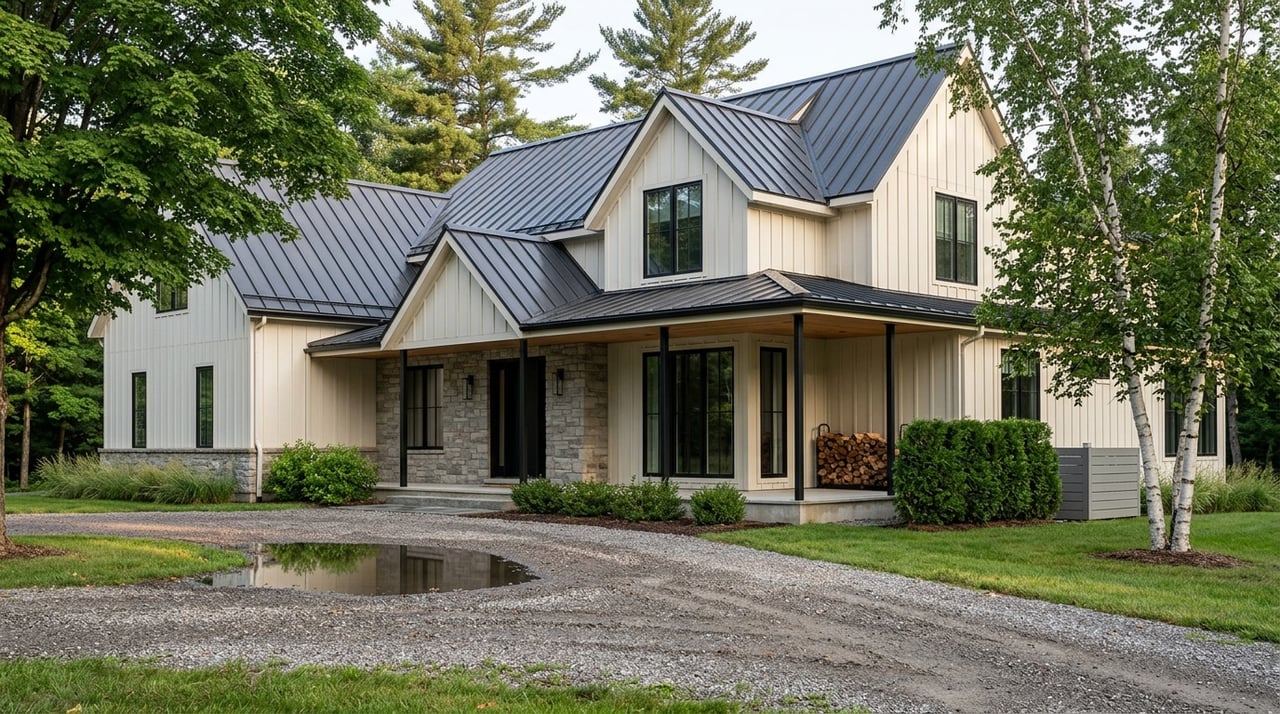
Dreaming about a farmhouse, acreage, or a quiet getaway in Leelanau County? Rural property can offer space, privacy, and flexibility, but it also comes with questions you may not face in town. If you are thinking about buying a rural home or vacant land here, understanding roads, utilities, and permits early can help you avoid surprises and move forward with confidence. Let’s dive in.
Why rural buying feels different
In many parts of Leelanau County, rural properties rely on parcel-specific systems instead of municipal water and sewer. That means the details of a single property can matter as much as the home itself.
Before you fall in love with the setting, it helps to look closely at access, well and septic status, and permit requirements. Those are often the issues that shape how easy a property will be to use now and in the future.
Road access matters year-round
A country road can feel peaceful in July and very different in January. The Leelanau County Road Commission maintains, repairs, and plows county roads, but it also operates a seasonal road system for roads closed to public travel from November through April.
That means you should confirm exactly what kind of road serves the property. A home may be easy to reach in summer, but winter access may be slower or more limited depending on the road and maintenance pattern.
Ask who maintains the road
Start with a simple question: is the road county-maintained year-round, seasonal, or privately maintained? You will also want to know who handles snow removal and what that looks like during heavy winter weather.
This can affect your day-to-day convenience, but it also matters for deliveries, service calls, and general year-round access. If you are buying a second home or planning frequent winter use, this step is especially important.
Driveways can affect future plans
The road commission also reviews driveway standards and sight distance in certain situations involving private land division. If you are buying a larger parcel and thinking ahead to a split or future build, access design should be part of your early planning.
Even for an existing home, driveway width, overhead clearance, and safe entry from the road can become practical concerns. These details may sound small, but they can shape both usability and permitting.
Wells and septic deserve early attention
Many rural homes in Leelanau County depend on private wells and septic systems. That makes utility due diligence one of the most important parts of your buying process.
The local health department evaluates well locations, issues well construction permits, and requires final approval conditions that include on-site inspection plus lab results for bacteria and nitrate before a new water supply is approved. In short, private water systems are closely tied to property-specific review.
Time of Transfer evaluations are required
For homes with septic and or wells, a Time of Transfer evaluation is required before the sale is final. The local health department says this process can take about 3 to 4 weeks.
If you are preparing an offer, ask whether that evaluation has already started. If not, you will want to account for that timing as part of your transaction planning.
Vacant land needs septic feasibility review
If you are considering vacant land without municipal wastewater service, a site survey or vacant land evaluation is the first step to determine whether a septic system is feasible. This is one of the most important due diligence items for buyers looking at larger parcels.
That review looks at factors such as:
- Soil type and permeability
- Seasonal high-water table
- Slope
- Separation from wells and surface water
- Runoff patterns
- Easements and rights-of-way
- Buried utilities
- Nearby development
A beautiful parcel is not always a simple building site. The health department review helps you understand what the land may realistically support.
Broadband is not uniform
If you work from home, stream regularly, or simply want dependable connectivity, do not assume broadband is available just because a property has an address. In Leelanau County, coverage remains highly location-specific.
A county broadband planning page reported that 5,045 occupied parcels, or 22 percent, were without access to cable or fiber and had little to no access to other high-speed broadband services. At the same time, Spectrum reported in 2024 that it expanded gigabit service to more than 660 homes and small businesses in parts of Cleveland, Glen Arbor, Empire, and Kasson townships.
Verify service at the exact address
The key takeaway is simple: check service for the specific property, not just the general area. Two homes on nearby roads may have very different internet options.
It is also smart to confirm whether cell service works well enough for your daily needs. For many buyers, connectivity is now as important as square footage.
Permits and zoning come first
If you plan to build, add a garage, remodel, or place an outbuilding on the property, permit sequencing matters. County building safety guidance says you should not apply for a building permit until all other required permits have been obtained, and incomplete applications will not be accepted.
Depending on the project, the checklist can include proof of ownership, address confirmation, a soil erosion permit where applicable, a health department permit, a driveway permit, a land use permit, state energy code compliance, and sometimes electrical, plumbing, and mechanical permits.
Township zoning still applies
A large lot does not mean unlimited freedom. Township zoning still plays a major role, and township approval is not replaced by other permits.
For example, a township land use permit application may require site-plan details showing parcel dimensions, existing and proposed structures, setbacks, easements, driveways, and the location of wells, septic systems, and fuel tanks. In some cases, the form also asks whether the driveway has at least 12 feet of width and overhead clearance.
Additions can trigger utility review
If you are thinking about a remodel or addition, the work may affect more than the house plans. The health department notes that remodeling or additions may require an existing-system evaluation if the footprint may encroach on the septic system or water well, or if wastewater flow increases.
That is why it helps to confirm the permit path before you close, not after. A project that looks simple on paper may involve several layers of local review.
Questions to ask before making an offer
Rural homeownership often goes more smoothly when you ask the right questions early. Before you move forward, consider this checklist:
- Is the road county-maintained year-round, seasonal, or privately maintained?
- Who handles snow removal and winter access?
- Does the property have a private well, a septic system, or both?
- When were the well and septic last evaluated?
- If the home is under contract, is the Time of Transfer evaluation already underway?
- If the parcel is vacant or partially improved, has a vacant-land septic evaluation been completed?
- Are there any known issues related to soil, slope, water table, setbacks, easements, or buried utilities?
- Which township zoning rules apply to the property?
- What permits would be needed for your intended use or improvements?
- Is broadband service available at the exact address?
- Is cell service reliable enough for your needs?
These questions can help you compare properties more clearly and avoid last-minute surprises.
A smoother path to rural ownership
Buying rural property in Leelanau County can be incredibly rewarding, but it pays to look beyond the home’s charm. Access, utilities, broadband, and permit sequencing often shape your experience more than finishes or square footage.
When you verify these details early, you give yourself a clearer picture of how the property will function in every season and whether it supports your long-term plans. If you want thoughtful, step-by-step guidance as you explore rural homes, acreage, or second-home opportunities in northern Michigan, Nan Ray is here to help.
FAQs
What should buyers know about rural roads in Leelanau County?
- Buyers should confirm whether the property is on a county-maintained, seasonal, or privately maintained road and ask who handles snow removal and winter access.
What is a Time of Transfer evaluation in Leelanau County?
- For homes with septic and or wells, a Time of Transfer evaluation is required before the sale is final, and the local health department says the process can take about 3 to 4 weeks.
What should buyers check before purchasing vacant land in Leelanau County?
- Buyers should ask whether a vacant-land septic evaluation has been completed and review factors like soil, slope, seasonal high-water table, easements, rights-of-way, and buried utilities.
Why should buyers verify broadband at a Leelanau County property?
- Broadband coverage is uneven across the county, so buyers should verify internet service at the exact address rather than assume availability based on the surrounding area.
Do township zoning rules still matter on large rural parcels in Leelanau County?
- Yes. Township zoning still applies, and buyers should confirm required land use approvals and permit steps before planning a build, addition, or other property improvement.